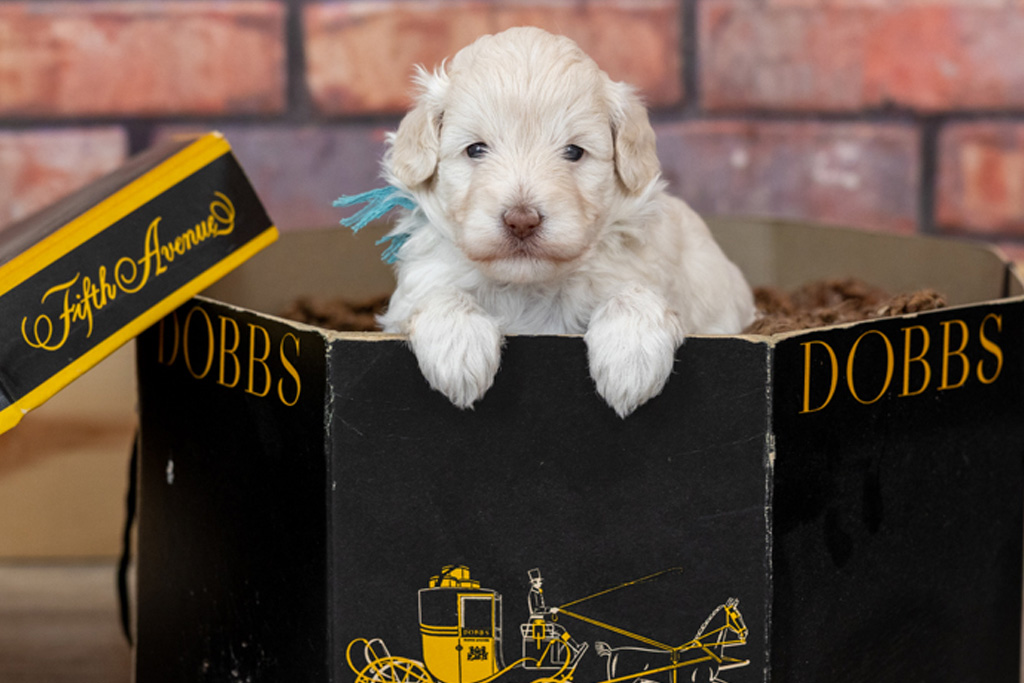
One of the things people love most about Minidoodles is how connected they are to their families.
They want to be near their people. They follow you from room to room, settle beside you while you work, and naturally become part of the rhythm of daily life. For many owners, that companionship is exactly what they were hoping for.
But sometimes, especially during puppyhood, families begin to wonder whether that attachment is becoming something more serious.
Is my puppy just bonded to me, or are they developing separation anxiety?
It’s a valid question, especially for first-time owners who are still learning what’s normal. The good news is that attachment itself is not the problem. In fact, a close connection is one of the reasons so many families love living with Minidoodles in the first place.
The important thing is understanding the difference between healthy attachment and true distress, and helping puppies develop confidence and independence early enough that closeness remains something enjoyable rather than something emotionally necessary.
Most Minidoodles Naturally Want to Be Near Their People
Minidoodles are companion-oriented dogs. They tend to form strong bonds quickly and genuinely enjoy being involved in daily life.
When puppies first come home, this attachment often becomes even stronger because everything around them is new. They have left their litter, familiar surroundings, and the routines they have known since birth. Following their owner from room to room is often their way of gathering information and feeling safe in an unfamiliar environment.
That behavior alone is not a red flag.
Many puppies want to nap nearby, watch what their people are doing, or check in frequently throughout the day. In most cases, this is simply part of healthy adjustment and relationship-building.
Missing You Is Not the Same as Separation Anxiety
One of the biggest misconceptions around separation anxiety is that any sign of attachment means a dog is anxious.
That is not usually the case.
A puppy who briefly whines when you leave the room, settles after a few minutes, or prefers being close to you is not necessarily experiencing true anxiety. Young dogs are still learning routines, building confidence, and regulating their emotions.
Actual separation anxiety tends to look much more intense and persistent. Dogs experiencing it often struggle to settle at all when left alone. Some panic, vocalize continuously, pace, drool excessively, or become destructive, specifically around departures and separation.
For most puppies, however, the issue is not panic. It is simply inexperience with independence.
That distinction matters because the solution is not emotional distance. It is confidence-building.
Why Some Puppies Struggle More with Independence
Several different factors can influence how comfortable a puppy feels being alone.
Temperament plays a role, but lifestyle matters just as much. Puppies who are constantly surrounded by interaction sometimes never fully learn how to relax independently. This has become more common in homes where someone works remotely or where schedules allow people to be present nearly all the time.
There is nothing inherently wrong with that setup. In fact, many families love having extra time to spend with their puppy. Problems usually develop only when puppies never practice brief, safe separation.
Without those experiences, some dogs begin to believe constant closeness is the only version of safety.
That is why independence should be introduced gradually from the beginning, long before a puppy seems distressed.
Independence Is a Skill Puppies Learn
A lot of owners assume independence either comes naturally or it doesn’t. In reality, it is something puppies learn through repetition and experience.
Small moments matter more than dramatic training sessions.
Allowing your puppy to nap in their crate, settle on a nearby bed instead of always in your lap, or spend short periods resting in another room all help build emotional flexibility. These experiences teach puppies that separation is temporary and safe.
The goal is not to create distance between you and your dog. The goal is to help them feel secure enough that they do not panic when closeness is not immediately available.
That emotional security is what healthy independence really looks like.
Crate Training Often Helps More Than Owners Realize
When introduced properly, crate training can become one of the most valuable tools for raising a confident puppy.
A crate should not feel isolating or punitive. Instead, it becomes a predictable resting space where the puppy can relax, decompress, and learn how to settle calmly on their own.
Minidoodles who develop positive crate habits early often transition more easily into temporary alone time because they already associate the space with safety and routine.
The process should always be gradual and positive. Puppies need time to learn that calm rest is rewarding, especially in busy households where stimulation is constant.
Emotional Energy Around Departures Matters
Dogs pay close attention to emotional patterns.
When departures become dramatic, whether through extended goodbyes, anxious energy, or overly emotional greetings upon return, puppies can begin interpreting separation as something significant or stressful.
Calm departures and calm arrivals help normalize the experience instead.
That does not mean owners need to ignore their dog completely. It simply means treating leaving and returning as ordinary parts of daily life rather than emotionally charged events.
Often, the calmer the humans are about separation, the calmer the puppy becomes as well.
Mental Fulfillment Helps Puppies Relax
Many behaviors associated with clinginess become more intense when puppies are either under-stimulated or overtired.
Minidoodles benefit from a balanced routine that includes movement, enrichment, training, socialization, and proper rest. Puppies who receive appropriate mental engagement are usually far more capable of settling calmly afterward.
At the same time, nonstop activity is not the answer. Puppies who are constantly entertained often struggle to develop self-regulation and emotional balance.
There is real value in teaching dogs that quiet time and rest are normal parts of daily life.
Confidence Beyond the Home Matters
Puppies who feel confident navigating the world are often less emotionally dependent overall.
Thoughtful socialization helps Minidoodles learn that unfamiliar experiences, sounds, people, and environments are manageable rather than overwhelming. Puppies who build confidence through gradual exposure tend to recover more easily from stress and rely less on a single person for reassurance.
This is one reason early socialization matters so much. Confidence and independence are closely connected.
Most Puppies Improve Significantly with Consistency
One of the most reassuring things owners should know is that mild clinginess during puppyhood is incredibly common.
In many cases, puppies simply need:
- predictable routines
- gradual independence practice
- confidence-building experiences
- calm leadership
- enough rest and structure
Over time, these small daily habits add up in meaningful ways.
Puppies mature. Confidence grows. Routines become familiar. What once felt emotionally overwhelming often becomes completely manageable.
You Can Have a Closely Bonded Dog Without Overdependence
Minidoodles are meant to be connected dogs. Wanting to be near their people is part of what makes them such wonderful companions.
The goal is not to raise a dog who is distant or emotionally detached. It is to raise a dog who feels secure enough to rest calmly, adapt to routine changes, and remain emotionally steady even when temporary separation happens.
That balance creates healthier relationships for both the dog and the family.
And when independence is built thoughtfully from the beginning, many Minidoodles grow into exactly that kind of companion: affectionate, emotionally connected, and confident enough to feel safe both with you and without you nearby every second of the day.
Frequently Asked Questions
Are Minidoodles prone to separation anxiety?
Minidoodles are very people-oriented dogs, so they can become strongly attached to their families. However, attachment and separation anxiety are not the same thing. With consistent routines, confidence-building, and early independence practice, many Minidoodles grow into emotionally balanced and adaptable companions.
Is it normal for my Minidoodle puppy to follow me everywhere?
Yes, especially during the first few weeks at home. Puppies naturally seek reassurance and safety from their owners while adjusting to a new environment. Following you from room to room is often part of healthy bonding and early adjustment.
How can I help my Minidoodle become more independent?
Building independence starts with small, consistent habits. Encouraging calm crate time, allowing your puppy to settle independently, practicing short departures, and maintaining predictable routines all help puppies build confidence over time.
Does crate training help prevent separation anxiety?
When introduced positively and gradually, crate training can help puppies feel secure and comfortable spending time alone. The crate becomes a predictable resting space rather than a source of stress, which often supports emotional regulation and confidence.
Can working from home make separation anxiety worse?
It can contribute if puppies never learn how to spend time independently. Dogs who are constantly surrounded by interaction sometimes struggle more when routines suddenly change. Even in work-from-home households, it’s helpful to practice short periods of separation and independent rest early on.
What’s the difference between clinginess and separation anxiety?
Clinginess is usually mild attachment behavior, like following you around the house or preferring to stay nearby. Separation anxiety involves intense emotional distress that continues even after the owner leaves, such as panic, destructive behavior, or inability to settle.
Will my Minidoodle grow out of clingy behavior?
In many cases, yes. As puppies mature and gain confidence through routine, training, and positive experiences, attachment behaviors often become more balanced and manageable. Consistency and patience make a significant difference.
Can socialization help reduce separation-related behaviors?
Yes. Puppies who feel confident in different environments and experiences are often less emotionally dependent overall. Thoughtful socialization helps dogs develop resilience, adaptability, and confidence outside of constant proximity to their owner.