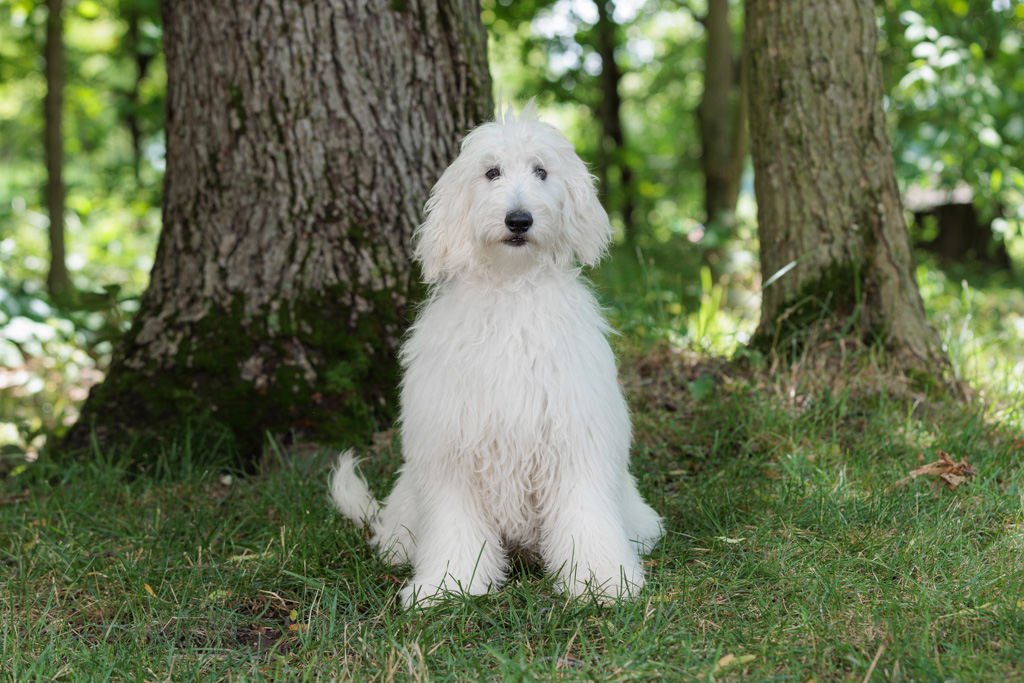
Your Minidoodle jumps on a guest after weeks of practicing calm greetings. They grab a shoe even though an entire basket of toys is sitting nearby. You ask them to come, and they suddenly seem far more interested in whatever they found in the grass.
These moments can be frustrating, especially when you thought your puppy understood what to do.
But dogs do not make mistakes because they are trying to disappoint us. In most cases, a puppy “getting it wrong” means the situation was more difficult than expected, the desired behavior was not yet fully learned, or another choice felt more rewarding in that moment.
That distinction matters.
When we treat mistakes as defiance, our response tends to become emotional. When we see them as information, we can respond more clearly and teach the dog what to do instead.
Minidoodles are intelligent, engaged dogs that generally respond well to positive, consistent guidance.
They still need repetition, realistic expectations, and plenty of practice in different situations. Knowing how to respond when something goes wrong helps preserve trust and turn everyday challenges into useful training opportunities.
A Mistake Is Not the Same as Disobedience
It is easy to assume that a dog who performs a cue at home should be able to perform it everywhere.
Dogs do not always generalize learning that easily.
Your Minidoodle may understand “sit” in the quiet kitchen but struggle when three guests are entering the house. They may come immediately in the backyard but find recall much harder at a park filled with new smells. A puppy who walks nicely down an empty sidewalk may pull when another dog appears.
The behavior has not necessarily been forgotten. The environment has changed.
Distractions, excitement, fatigue, fear, uncertainty, and distance can all make a familiar skill more difficult. Puppies are also still developing impulse control, so knowing what to do does not always mean they can consistently do it under pressure.
Instead of asking, “Why is my dog refusing to listen?” it is often more helpful to ask, “What made this moment harder than our previous practice?”
That question leads to better training decisions.
Start by Managing Your Own Reaction
The first few seconds after a mistake often determine whether the moment becomes productive or stressful.
Your Minidoodle may have knocked something over, ignored a cue, or embarrassed you in front of a guest. Even so, raising your voice or reacting harshly rarely makes the desired behavior clearer.
Pause before responding.
That pause does not mean allowing unsafe behavior to continue. It simply gives you enough time to respond intentionally rather than emotionally.
Dogs pay close attention to our tone, posture, and movement. A sudden angry reaction may stop a behavior in the moment because the dog becomes startled or worried, but stopping is not the same as learning.
A calm response makes it easier to show your dog what should happen next.
Interrupt Unsafe Behavior Without Creating Fear
Positive reinforcement does not mean standing by while your dog does something dangerous.
If your puppy is chewing an electrical cord, running toward an open door, or grabbing something harmful, intervene immediately. Block access, move the item, use a leash if appropriate, or guide your dog away from the situation.
The interruption should be clear, but it does not need to be frightening.
Once everyone is safe, redirect your Minidoodle toward an appropriate behavior. Offer a chew toy, ask for a familiar cue, or move to an environment where they can be successful.
The lesson is not simply, “Stop doing that.”
The more useful lesson is, “This is what you can do instead.”
Show Your Minidoodle the Better Choice
One limitation of punishment is that it may tell a dog that a behavior was unwanted without explaining what would have worked.
A puppy scolded for jumping still needs to learn how to greet people appropriately. A dog pulled away from a shoe still needs an acceptable outlet for chewing. A Minidoodle interrupted while barking at the window still needs help disengaging and settling.
Redirection gives the dog a clear alternative.
When your Minidoodle jumps, guide them into a sit and reward four paws on the floor. When they grab the wrong object, exchange it for an appropriate toy. When they pull toward something exciting, create enough distance to regain their attention and reward a moment of connection.
The replacement behavior should be realistic. Asking an overstimulated puppy to hold a long stay while guests crowd around them may be too difficult. A simpler option, such as stepping behind a gate with a chew or greeting one person at a time, may lead to far more success.
Good training meets the dog where they are in that moment.
Reinforce the Behavior You Want to See Again
Positive reinforcement means following a desired behavior with something the dog values, making that behavior more likely to happen again.
Food is often useful because it can be delivered quickly and precisely, but reinforcement can also include praise, play, access to the yard, permission to greet someone, or the chance to continue moving forward on a walk.
What matters is that the reward is meaningful to your dog and arrives close enough to the behavior for the connection to be clear.
Imagine your Minidoodle sees a visitor and rushes forward. You create a little distance, regain their attention, and they place all four paws on the floor. That is the moment to reinforce.
Waiting several minutes may make it harder for the dog to understand what earned the reward.
Timing helps turn an ordinary success into a clear lesson.
Lower the Difficulty When Your Dog Is Struggling
Repeatedly asking your dog to perform a behavior they cannot usually perform creates frustration for both of you.
If your Minidoodle ignores a cue, avoid repeating it over and over in a louder voice. Instead, make the situation easier.
Move closer. Reduce the distraction. Use a leash or gate. Ask for a simpler behavior your dog knows well. Reward the successful response, then revisit the more difficult version during a planned training session.
This is not letting your dog “win.” It prevents the cue from becoming background noise and gives your puppy a better chance to understand.
Training should gradually progress from easier situations to harder ones. A puppy who can settle while one family member cooks may not yet be ready to remain calm during a crowded holiday dinner. Breaking the challenge into smaller steps helps build the skill without overwhelming the dog.
What to Do When Your Minidoodle Jumps
Jumping is common in puppies because it often works. It brings them closer to faces, creates interaction, and almost always gets a reaction.
Pushing the dog away, talking excitedly, or repeatedly touching their chest may unintentionally provide the attention they were seeking.
Instead, reduce access to the greeting until your Minidoodle offers a calmer choice. You might step back, use a leash, or ask the guest to pause. The moment all four paws remain on the ground, reward that position and allow the greeting to continue.
If your puppy becomes too excited to succeed, give them a brief reset away from the door. This is not a punishment. It is a chance to lower the intensity so they can try again with a clearer head.
Over time, your dog learns that calm behavior leads to greetings (and belly rubs), while jumping delays them.
What to Do When Your Puppy Bites During Play
Puppies use their mouths to explore, communicate, and play. Mouthing does not make a Minidoodle aggressive or “bad,” but it does need thoughtful guidance.
When teeth touch skin or clothing, pause the interaction and offer an appropriate toy. If the puppy immediately returns to biting, calmly end the game for a short period and give them time to settle.
It is also worth considering what happened before the biting increased. Many puppies become mouthier when they are overstimulated, overtired, hungry, or in need of a potty break.
The answer may not be more correct. It may be a nap, a calmer activity, or a different environment.
Consistency helps your puppy learn which choices keep play going and which choices pause the activity.
What to Do When Your Minidoodle Chews the Wrong Thing
Chewing is a normal puppy behavior. The goal is not to eliminate it, but to direct it toward safe and appropriate objects.
If your puppy takes a shoe, avoid turning the moment into a chase. Chasing can transform the stolen item into a very exciting game.
Calmly approach, offer a trade, and reward the release. Then provide an appropriate chew and put the tempting item somewhere your puppy cannot reach.
Management is an important part of training. A puppy who repeatedly gains access to shoes, children’s toys, or household items gets many chances to practice the wrong behavior.
Keeping those objects out of reach is not avoid training. It is preventing an unwanted habit from becoming stronger while your puppy learns what belongs to them.
What to Do After a Potty Accident
A potty accident discovered after the fact is not a useful training opportunity.
Your puppy will not connect punishment with something that happened several minutes earlier. Scolding, pointing at the accident, or bringing the dog back to the area may create confusion without improving housetraining.
Clean the area thoroughly and consider what part of the routine needs to change. Your puppy may need more frequent outdoor trips, closer supervision, or a clearer pattern around meals, play, and waking from naps.
When you catch the puppy beginning to eliminate indoors, calmly interrupt and take them outside. Reward them when they finish in the appropriate place.
If a previously housetrained dog suddenly begins having accidents, speak with your veterinarian to rule out a health-related cause.
What to Do When a Cue Is Ignored
When a dog does not respond to a cue, first consider whether they truly understood it in that setting.
Was your Minidoodle distracted? Were you too far away? Had the cue been practiced with that level of excitement? Was the reward strong enough to compete with what they were doing?
Avoid repeating the cue many times. Saying “come” six times teaches the dog that the first five may not matter.
Instead, reduce the difficulty and help your dog succeed. Move closer, use a long leash where appropriate, create distance from the distraction, or practice in a quieter environment.
Recall deserves special care because it affects safety. Reward your dog generously for coming, and avoid using recall only for things they dislike, such as ending play or leaving the park.
You want returning to you to remain one of the best choices your Minidoodle can make.
Do Not Punish Warning Signals
Growling, moving away, freezing, and avoiding interaction are forms of communication.
Punishing a dog for expressing discomfort may stop the visible warning without changing how the dog feels. That can make future interactions less predictable because the dog learns that communicating early is unsafe or ineffective.
When your Minidoodle shows discomfort, create space and assess what triggered the response. A qualified trainer or behavior professional can help when warning signals are recurring, escalating, or difficult to interpret.
Listening to your dog does not mean every behavior is allowed. It means addressing the cause while maintaining safety and trust.
Review the Moment After It Is Over
Once the situation has passed, ask what could make the next attempt easier.
Perhaps the puppy needed more distance from the visitor. Maybe the walk happened when they were already overtired. The food left on the counter was too accessible. The cue had never been practiced outside. The reward was not valuable enough for the environment.
This reflection is not about blaming yourself. Every puppy owner misjudges situations sometimes.
It is about recognizing patterns.
When the same behavior keeps happening, the answer is rarely a stronger punishment. More often, the dog needs clearer teaching, better management, a smaller training step, or more consistent reinforcement.
Positive Reinforcement Still Includes Boundaries
Positive training is sometimes misunderstood as allowing dogs to do whatever they want.
In reality, reward-based training works best when expectations are clear.
You can prevent access to unsafe areas, use gates and leashes, interrupt harmful behavior, end play when biting becomes inappropriate, and require calm behavior before opening a door. Boundaries help dogs understand how to navigate family life.
The difference is that those boundaries are taught without intimidation or pain.
Your Minidoodle still learns that choices have outcomes. Calm behavior opens doors, starts play, earns greetings, and brings rewards. Unwanted behavior is interrupted, managed, and redirected rather than answered with fear.
That is not permissive. It is thoughtful communication.
Progress Will Not Be Perfect
Puppies do not move through training in a straight line.
Your Minidoodle may perform beautifully for several days and then struggle in a new setting. Adolescence may bring new confidence, stronger curiosity, and moments when familiar skills seem less reliable.
That does not mean the training failed.
Learning becomes durable through practice in different rooms, around different people, and under gradually increasing levels of distraction. A mistake simply shows you where more support is needed.
Your response in those moments matters. Calm guidance preserves trust, while clear reinforcement helps your dog understand how to make a better choice next time.
The Goal Is Communication, Not Perfection
Every Minidoodle will get things wrong.
They will become excited, misread a situation, forget a cue, or choose something that seems far more rewarding than what you asked them to do. That is part of living with a dog, especially during puppyhood.
The goal is not to create a dog who never makes a mistake. It is to build a relationship in which mistakes can be handled clearly, safely, and without damaging trust.
Pause before reacting. Interrupt when necessary. Show your dog what to do instead. Reinforce the better choice, and adjust the situation if the challenge was too difficult.
Those responses may feel small in the moment, but they shape how your Minidoodle learns to navigate the world.
When training is built on patience, consistency, and positive reinforcement, getting it wrong is not the end of the lesson.
Very often, it is where the real learning begins.
Frequently Asked Questions
Should I tell my Minidoodle “no”?
A calm interruption word can be useful, but it should be followed by clear guidance. Simply saying “no” does not tell your dog what behavior would be appropriate. Redirect them toward a better choice and reinforce it when they respond.
Does positive reinforcement mean I always need treats?
No. Food is convenient and precise, but praise, play, attention, access to an activity, and environmental rewards can also reinforce behavior. Treats are especially helpful when teaching a new skill or practicing around distractions.
What should I do if my Minidoodle keeps making the same mistake?
Look at what happens before the behavior and what the dog gains from it. You may need to prevent access, reduce distractions, teach an alternative behavior, or make reinforcement more meaningful. Repeated mistakes usually signal that part of the training plan needs to change.
Is redirecting a dog the same as rewarding bad behavior?
Not when it is handled thoughtfully. Interrupt the unwanted behavior first, then reinforce the appropriate alternative after your dog performs it. The reward is connected to the new choice, not the original behavior.
What if my Minidoodle seems too excited to listen?
Create distance from the distraction and give your dog time to settle. Ask for a simple, familiar behavior rather than repeatedly demanding something they cannot currently perform. Resume training at a level where your dog can succeed.
When should I seek help from a professional trainer?
Professional guidance can be useful when behaviors are escalating, creating safety concerns, or not improving with consistent training. Look for a trainer who uses humane, reward-based methods and is willing to explain both the training plan and the reasoning behind it.