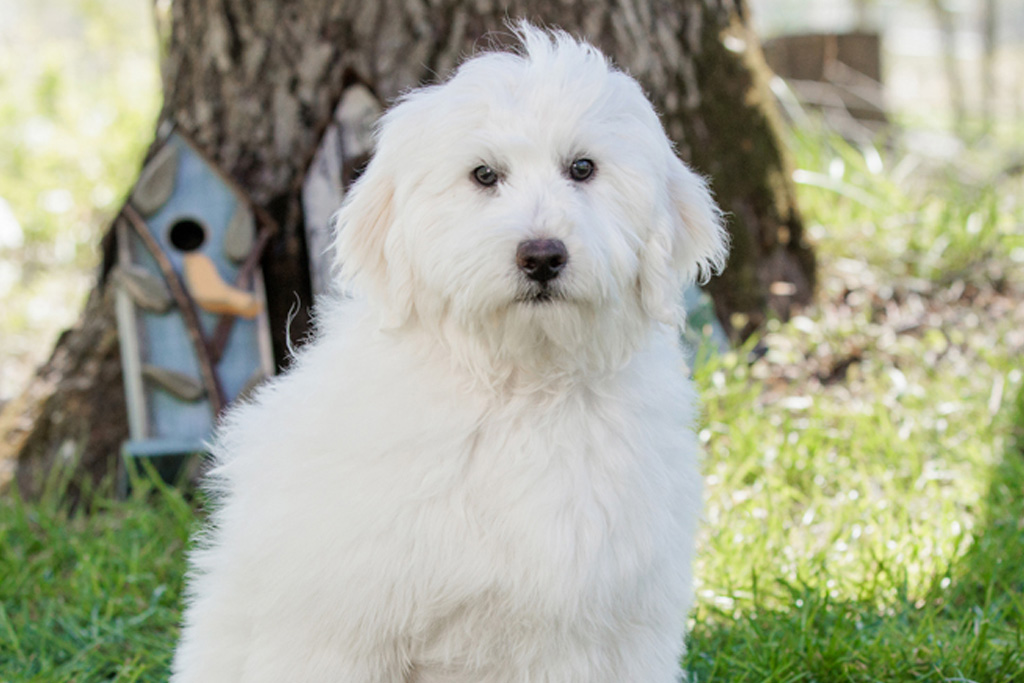
One of the joys of having a Minidoodle is being able to include them in everyday life.
A morning coffee on a dog-friendly patio, a walk through a busy downtown area, a weekend away, a family event, or a quick stop somewhere pet-friendly can all become more enjoyable when your dog is comfortable coming along.
But confidence in public does not happen simply because a puppy has been taken to a lot of places.
It develops through experience, training, and trust.
For a young Minidoodle, the world can be incredibly interesting. People move in every direction, doors open, carts roll past, children laugh, cars pull in and out, unfamiliar surfaces appear underfoot, and there are more smells than we could possibly appreciate.
That is a lot to process.
The best way to help your Minidoodle become comfortable in those environments is not to expose them to everything all at once. Build confidence gradually, starting with manageable experiences and letting your puppy succeed before asking for more.
When that foundation begins early, many Minidoodles grow into dogs who can enjoy being out in the world without feeling like they need to react to everything happening around them.
Confidence Starts Before the Busy Places
A busy public setting is usually not the ideal place to teach foundational skills for the first time.
Before asking your Minidoodle to settle beside you on a crowded patio, it helps if they already know how to settle at home. Before expecting them to walk calmly through a busy shopping area, they should have some experience walking with you in quieter surroundings.
Think of public confidence as something built on skills your puppy already understands.
Useful foundations include being able to respond to their name, walk comfortably on leash, check in with you, sit or settle when asked, and recover after something unexpected happens.
None of those behaviors need to be perfect before you leave the house. They simply give your puppy familiar things to fall back on when the environment becomes more interesting.
This is one of the reasons training and socialization work so closely together. Training gives your Minidoodle a shared language with you, while socialization gives them opportunities to use those skills in the real world.
Start Young, but Keep Early Experiences Appropriate
Puppyhood includes an important developmental period when positive exposure to different people, places, sounds, surfaces, and situations can help shape how a dog responds to the world later in life. The American Veterinary Society of Animal Behavior emphasizes that early socialization should be safe, positive, and appropriate for the individual puppy.
That does not mean a very young puppy needs to attend a street festival.
Early socialization can be surprisingly simple.
Your puppy might sit with you at a comfortable distance while people pass by. They might hear traffic from a quiet parking area, walk over a new type of surface, watch children play from across a park, or spend a few minutes in a dog-friendly environment during a quieter time of day.
These small experiences add up.
AKC guidance similarly recommends avoiding overwhelming a puppy with a huge crowd or very busy public environment as their first exposure. Instead, puppies can gradually experience more challenging situations as their confidence develops.
The goal is not to see how much your puppy can tolerate.
The goal is to help them discover that new places can feel safe.
Short Trips Are Often Better Than Big Adventures
When a first public outing goes well, it can be tempting to stay longer.
Your Minidoodle is doing beautifully, everyone wants to say hello, and you are finally getting to enjoy the kind of outing you imagined having with your dog.
Sometimes the best choice is still to leave.
A ten-minute visit that ends while your puppy is relaxed can be more valuable than a forty-five-minute outing that eventually becomes too much.
Young dogs can become tired from simply processing a new environment. They are watching, listening, smelling, learning, and figuring out how they fit into everything happening around them.
That mental effort counts.
Short outings allow your puppy to have a positive experience, return home, rest, and try again another day. Over time, you can gradually extend the duration as your Minidoodle becomes more comfortable.
Keep puppy sessions short, positive, and successful rather than continuing until the dog becomes overwhelmed or disengaged.
Choose the Easy Version First
Busy public places have levels.
A coffee shop patio at 9:30 on a quiet weekday morning is not the same experience as that patio during Saturday brunch. A neighborhood shopping area on a calm afternoon may feel very different from the same area during a holiday event.
Use those differences to your advantage.
Start at quieter times and give your Minidoodle an opportunity to learn the environment before introducing the busiest version of it.
You might begin at the edge of a park instead of walking directly through a crowd. You could spend a few minutes outside a pet-friendly store before going inside. A restaurant patio might begin with a table tucked away from the main walkway rather than one beside the entrance.
Gradually increasing the intensity gives your dog time to build experience without asking them to make a huge leap.
This approach is consistent with behavior guidance recommending that puppies begin at a distance or lower level of intensity when needed, rather than being forced directly into situations that feel overwhelming.
Your Minidoodle Does Not Need to Meet Everyone
Socialization is sometimes confused with socializing.
They are not quite the same thing.
A well-socialized dog does not necessarily run up to every person, greet every dog, or interact with everyone they see. In many situations, the more useful skill is being able to notice something interesting and remain comfortable without getting involved.
That is especially valuable in public places.
Your Minidoodle may watch someone walk past and then return their attention to you. They may notice another dog across the room without pulling toward them. They can sit beneath a table while people move nearby without believing every person is there specifically to meet them.
Those moments are successes.
You are teaching your dog that being out in public does not mean they have to participate in everything.
For a naturally people-oriented Minidoodle, learning that distinction can make outings much calmer and more enjoyable.
Reward the Behavior You Want in Public
Public outings offer hundreds of small training opportunities.
Your Minidoodle looks back at you instead of pulling toward someone, so you reward the check-in. They remain calmly beside you while a person walks past, and you quietly reinforce that choice. They settle beneath your chair for a moment, and you let them know that relaxing is worthwhile.
Those are exactly the behaviors you want to grow.
Reward-based training is recommended by veterinary behavior organizations for teaching dogs new skills and changing behavior. AVSAB specifically recommends reward-based methods for dog training and behavior modification.
Rewards do not have to mean feeding treats continuously for the rest of your dog’s life.
During early training, food can make it easy to mark and reinforce the exact moment your puppy makes a good choice. Praise, movement, play, access to something enjoyable, and simply being allowed to continue an outing can also become meaningful rewards.
The important part is helping your Minidoodle understand which choices work well in that environment.
Teach Your Minidoodle to Check In With You
One of the most useful behaviors in a busy place is surprisingly simple: your dog looks at you.
A voluntary check-in tells you that your Minidoodle is still able to disengage from the environment and reconnect with you.
You can build this habit first in easy environments.
When your puppy naturally looks toward you during a walk, acknowledge it. Reward them for choosing to reconnect instead of waiting until you have to repeatedly call their name.
Once the behavior becomes familiar, it can become incredibly helpful in public.
A shopping cart rolls past, your dog notices it, and then glances back at you. A child runs nearby, and your puppy checks in before deciding what to do.
These moments create a pattern where your Minidoodle learns that when the world becomes interesting, you are a useful person to consult.
That is a much stronger foundation than expecting your dog to ignore everything around them.
Settling Is One of the Best Public-Space Skills
Walking politely is useful, but confidence in public is not only about movement.
Your Minidoodle also needs to learn how to do nothing.
That can be surprisingly difficult for a young dog.
Practice settling on a mat or bed at home first, then bring that skill into gradually busier environments. You might begin on your own porch, move to a quiet park bench, and eventually practice at a dog-friendly patio.
Keep early expectations short.
Your puppy may initially settle for only a minute before needing a break, and that is completely fine. With repetition, they learn that being in a new place does not always mean exploring, greeting, or playing.
Sometimes the activity is simply lying beside their family and watching life happen.
For dogs you hope to include regularly in outings, that ability is invaluable.
Watch Your Dog Instead of the Clock
A planned thirty-minute outing does not need to last thirty minutes if your Minidoodle is telling you they have had enough after twelve.
Pay attention to the individual dog.
You may notice your puppy stops taking treats, becomes unable to settle, begins pulling more persistently, or seems increasingly distracted. A dog who was happily observing may begin trying to create distance or may simply lose the ability to respond to familiar cues.
Those are useful signals.
Rather than pushing through because you want your puppy to “get used to it,” make the situation easier or leave while the experience can still end well.
AVSAB emphasizes that socialization is more than simple exposure. Experiences that are too intense can increase fear rather than confidence, which is why the dog’s individual response matters so much.
Leaving early is not a failed outing.
Sometimes it is excellent training.
Distance Can Be Your Friend
Families sometimes assume that confidence means being right in the middle of everything.
It does not.
A dog can learn an enormous amount from twenty feet away.
If your Minidoodle is unsure about a busy entrance, sit farther away and allow them to watch. If children running nearby feel like too much excitement, create enough distance that your puppy can observe without becoming overwhelmed.
Once your dog is relaxed at that distance, you can gradually move closer over future visits.
Confidence develops when dogs repeatedly experience situations they can handle successfully.
Moving closer simply because you think your dog “should” be able to manage it does not provide the same lesson.
Your puppy sets the pace more than the map does.
Bring Familiar Training Into Unfamiliar Places
One of the best ways to help a Minidoodle feel secure in a new environment is to ask for something they already know.
Practice a simple sit. Reward a name response. Walk a few steps together. Ask for a brief settle.
Familiar behaviors give your dog something understandable to do while everything around them is unfamiliar.
Gradually move training from easier environments such as the home and yard into more distracting public spaces.
You do not need to run through every command your puppy has ever learned.
A few successful, familiar interactions can be enough to remind them that the same communication you use at home still works here.
Build Up the Type of Places Your Family Actually Visits
Public confidence should serve your real life.
If your family loves outdoor restaurants, work toward comfortable patio manners. If you spend weekends traveling, practice hotels, elevators, parking areas, and unfamiliar walking routes gradually. Families who attend children’s sporting events may want their Minidoodle comfortable around cheering, movement, folding chairs, and people coming and going.
You do not need to prepare your dog for every possible environment.
Focus first on the situations that matter to your household.
This makes training more practical and gives your Minidoodle experiences they are likely to use repeatedly throughout life.
Repeated familiarity tends to make these outings feel less like special training exercises and more like ordinary family activities.
Public Confidence Is Not the Same as Perfect Behavior
Your Minidoodle may occasionally become distracted.
They might stand up when you hoped they would remain settled, become especially interested in a person walking past, or need more reminders than usual in a new environment.
That does not mean the outing went badly.
Confidence is not measured by whether your puppy behaved like a fully trained adult dog.
Look instead at whether they were able to recover, reconnect with you, and continue participating comfortably.
A dog who briefly becomes excited and then settles again is learning an important skill.
The ability to recover matters enormously in real life because public environments are unpredictable.
Starting Young Helps, but Older Minidoodles Can Learn Too
Early positive experiences provide an important foundation, but confidence-building does not end when puppyhood does.
Adult dogs can continue learning new environments and developing more comfortable responses through gradual, positive experiences. Older dogs can still learn to associate unfamiliar or previously uncomfortable situations with positive experiences.
The same principles apply.
Start where the dog is comfortable, reward success, keep experiences manageable, and build gradually.
An older Minidoodle who has not spent much time in public may simply need more introductory steps than a puppy who grew up practicing those environments regularly.
There is no reason to rush the process.
Training Makes the Fun Parts Possible
When people picture taking their Minidoodle places, they tend to picture the destination.
They imagine the patio, the family trip, the weekend event, or the walk through town.
What makes those experiences enjoyable is usually the training that happened beforehand.
A dog who can walk with you, settle nearby, check in when something is distracting, and remain comfortable around everyday public activity is much easier to include.
That does not happen because the dog was repeatedly thrown into busy places until they eventually adjusted.
It happens through dozens of smaller experiences where the puppy learned, little by little, that new environments were manageable and their family would help them navigate them.
The trips get longer because the short ones went well.
The environments get busier because the quiet ones became comfortable.
The dog becomes confident because confidence was allowed to grow.
The Goal Is a Minidoodle Who Enjoys Coming Along
There is something wonderful about having a dog you can genuinely include in your life.
Your Minidoodle does not need to love every environment, greet every stranger, or accompany you everywhere to be a confident dog.
What you are looking for is comfort.
You want a dog who can walk into an appropriate public setting, take in what is happening, look to you when they need guidance, and gradually settle into the experience.
For some Minidoodles, that confidence develops quickly. Others need more repetition or a little more distance before they feel comfortable.
Both are okay.
Start young when you can, train the skills before you need them, choose easy outings first, keep early trips short, and build from there.
Eventually, the busy place that once required a ten-minute practice visit may become somewhere your Minidoodle happily joins you for an entire afternoon.
That is the beauty of building slowly.
You are not simply teaching your dog how to behave in public. You are helping them learn that the wider world can be a comfortable place to share with you.
Frequently Asked Questions
When should I start taking my Minidoodle to public places?
Positive exposure can begin during puppyhood, but where your puppy can safely go depends on vaccination status, local disease risk, and your veterinarian’s guidance. Early experiences should be controlled, positive, and appropriate for the puppy’s comfort level.
Should I take my puppy directly into crowded places for socialization?
No. Starting with quieter environments and gradually building toward busier settings generally gives puppies a better opportunity to develop confidence without becoming overwhelmed.
How long should my Minidoodle’s first public outings be?
Keep early outings short enough that your puppy remains comfortable and engaged. That might be only several minutes at first. Increase the duration gradually as the environment becomes familiar.
Does my Minidoodle need to greet people to become well socialized?
No. Calmly observing people without interacting is valuable too. A confident dog should be able to exist around people without feeling that every person needs to become a greeting opportunity.
What should I bring on public training outings?
Bring a secure leash and harness or collar, high-value rewards, water when appropriate, and anything your dog uses for settling, such as a portable mat. Choose supplies based on the length and type of outing.
What if my Minidoodle seems nervous in a public place?
Create more distance or move to a quieter area rather than forcing your dog closer. Reward calm behavior and consider ending the outing if your dog is unable to become comfortable.
How do I know if the environment is too much for my puppy?
Watch for changes such as an inability to respond to familiar cues, increasing pulling or restlessness, refusing rewards they normally enjoy, or repeatedly trying to move away. Those signs may mean it is time to reduce the difficulty or leave.
Can training at home really help with public behavior?
Yes. Skills such as leash manners, name response, checking in, settling, and basic cues are much easier to use in public when your Minidoodle already understands them in familiar environments.
Can an adult Minidoodle learn to become more confident in public?
Yes. Adult dogs can continue building confidence through gradual, positive exposure and reward-based training. The process should move at a pace the individual dog can comfortably handle.