As winter begins to thaw and the days slowly get longer, many dog owners notice the same thing happening: their dog suddenly seems to have a lot more energy.
If you have a Minidoodle, that shift can feel especially noticeable.
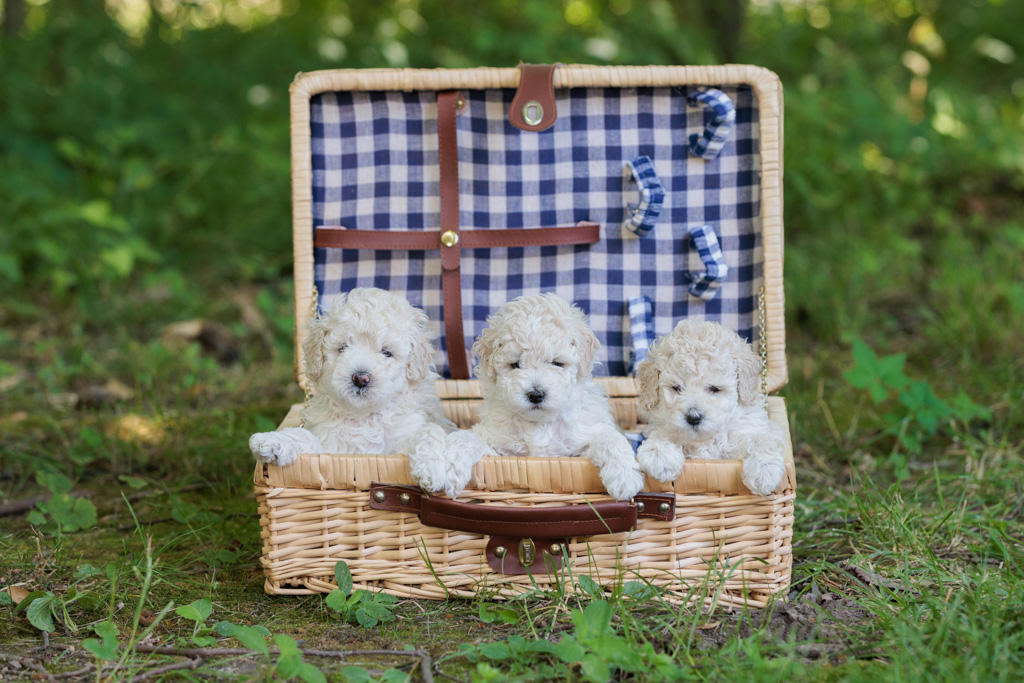
Our minidoodles are a cross between an English Cream Golden Retriever and a Toy Poodle, making them F1 English Cream Mini Goldendoodles. These two breeds are known for intelligence, curiosity, and a strong desire to engage with people and their surroundings. When spring arrives and outdoor activity increases, their world becomes far more interesting overnight.
More smells. More movement. More people. More distractions.
That excitement can be wonderful — but it also means your dog needs more mental engagement, not just more physical exercise.
Helping your Minidoodle stay mentally fulfilled during seasonal transitions can make the difference between a calm, happy dog and one who feels overstimulated or restless.
Why Spring Feels Like a Big Change for Dogs
Dogs experience the world differently than we do. They rely heavily on scent and environmental awareness, which means seasonal changes are much more dramatic for them.
As winter fades, your dog may suddenly notice:
- Fresh scents in the grass as plants begin growing again
- Squirrels, birds, and rabbits becoming active
- Children and neighbors spending more time outside
- More dogs walking through the neighborhood
- Lawn equipment, bicycles, and outdoor activity returning
- Wet ground, puddles, and muddy terrain
For a curious breed like a Minidoodle, this can feel like the world suddenly turned into a giant sensory playground.
While that stimulation is exciting, it can also make some dogs more distracted, reactive, or restless if they don’t have enough structured outlets.
Physical Exercise Alone Isn’t Enough
Many owners respond to spring energy by simply increasing walks or playtime.
That helps — but it’s only part of the solution.
Minidoodles are highly intelligent dogs. Their brains require engagement just as much as their bodies require movement.
If a dog gets plenty of exercise but very little mental stimulation, you may still notice behaviors like:
- pacing around the house
- excessive barking at outside activity
- chewing or digging
- difficulty settling down after walks
- constant attempts to initiate play
Mental fulfillment helps your dog process stimulation rather than simply reacting to it.
Make Walks More Engaging
One of the easiest ways to support your dog mentally is by making walks more interactive.
Instead of simply walking from point A to point B, try weaving in small training moments along the way.
For example, you can:
- ask for a sit before crossing the street
- reward your dog for checking in with you during the walk
- practice “leave it” when passing distractions
- change directions occasionally to keep your dog paying attention
These short exercises encourage your Minidoodle to stay mentally connected to you instead of becoming overwhelmed by everything happening around them.
Use Your Dog’s Nose
Minidoodles often inherit a strong scent interest from their retriever lineage. You can use that natural ability to provide excellent mental stimulation.
Simple scent-based games work beautifully.
Try things like:
- scattering a handful of treats in the grass for your dog to find
- hiding treats around the yard
- using a snuffle mat or puzzle feeder indoors
- hiding a favorite toy and encouraging your dog to search for it
Scent work taps into a dog’s natural instincts and can be surprisingly tiring in a healthy way.
Ten minutes of sniffing and problem-solving can leave a dog more satisfied than a quick round of fetch.
Keep Training Sessions Short and Positive
Spring is a great time to build new skills or reinforce existing training.
Because Minidoodles are eager to please and quick learners, they often thrive when training becomes part of their daily routine.
Short sessions are best. Even five to ten minutes of focused practice can make a difference.
You might work on:
- recall (coming when called)
- loose leash walking
- polite greetings
- basic commands like sit, down, or stay
- fun tricks like spin or touch
Training strengthens communication between you and your dog while also giving their brain something productive to focus on.
Rotate Toys and Activities
Dogs can become bored if their environment never changes.
Rotating toys and activities helps maintain interest without overwhelming them with constant novelty.
For example, you might rotate between:
- puzzle toys
- fetch sessions
- scent games
- training practice
- supervised play with another dog
Variety keeps your Minidoodle curious and engaged while still maintaining a predictable daily rhythm.
Don’t Forget the Importance of Rest
Spring excitement can sometimes lead to too much stimulation, especially for younger dogs.
A healthy routine includes both activity and calm time.
After walks or play sessions, give your dog opportunities to settle and relax. Chew toys, quiet time in their crate or bed, or simply resting near the family can help them decompress.
Dogs who learn how to transition from activity to relaxation tend to feel more balanced overall.
Helping Puppies Adjust to Their First Spring
If your Minidoodle is still a puppy, spring can be a big adjustment.
Everything feels new: the smells, the sounds, the textures of grass and mud.
For puppies, the focus should be on gentle exposure and positive experiences, not intense exercise.
Short exploration walks, calm socialization, and small training sessions will help them build confidence without becoming overwhelmed.
The goal is to help them learn how to navigate the world calmly and comfortably.
A Fulfilled Minidoodle Is a Happy One
As outdoor time increases, it’s easy to focus only on burning energy.
But the happiest Minidoodles are the ones whose minds are just as engaged as their bodies.
When you combine physical exercise with enrichment, training, and structured rest, you help your dog feel confident, balanced, and fulfilled.
And when that happens, all that spring energy turns into something wonderful: joyful adventures, relaxed evenings, and a dog who feels right at home in the world around them.